Chapter I · The Practice
A patient engineering practice for the systems your business will still run in ten years.
Verda Agro Limited builds software, cloud platforms and data systems for organisations that need their technology to be correct, resilient and quietly reliable. We work in long arcs, embedded with client teams, and hand over what we build with documentation, tests and the capacity to keep improving it.

A firm built the slow way, for work that has to last.
Verda Agro Limited is an independent information technology firm operating out of a small studio and across the timezones our clients occupy. We do a narrow set of things: we design software architectures, we write and ship code, we stand up and operate cloud infrastructure, we secure the systems our clients depend on, and we make sense of the data those systems produce.
The work is unglamorous by design. We prefer clarity to novelty, correctness to speed, and long relationships to logo collection. Our clients tend to be the operational core of their industries — the teams responsible when a system goes down at three in the morning — and we behave accordingly.

Verda Agro was formed to do one kind of consulting well.
The firm was founded by engineers who had spent long careers inside enterprises, watching valuable systems ossify because the teams supporting them were spread too thin. We built Verda as a counterweight — a small, senior firm that could be trusted with the parts of a client's business that other vendors were not willing to sit with for long enough.
Everything about the practice reflects that intent. Our team is small and deliberately senior. We take on fewer engagements than we could sell. Every project is staffed by people who wrote the proposal, and every proposal is written by people who will do the work. When a client's system is in trouble, the same names appear on the call.
Verda is a private limited company, self-funded, with no external investors setting quarterly targets. That allows us to say no to work that would not serve the client, to invest in engineers over margin, and to take a longer view of what a good outcome looks like.
Five commitments the firm makes to every engagement.
Correctness before cleverness
Systems that produce the right answer, quietly, are worth more than systems that produce interesting answers loudly. We optimise for the first.
Senior hands on every keyboard
We do not staff engagements with juniors reporting to remote leads. The engineer writing the code is the engineer accountable for it.
Slow enough to think
A day spent understanding a problem is rarely wasted. We keep timelines realistic so architectural decisions are made with the full picture in view.
Own the handover
When we finish, the client's team owns everything we built — the code, the runbooks, the diagrams, the reasoning. Nothing is left in a private notebook.
Transparent economics
Rates, scope, assumptions and risk are written down before work begins. There are no surprises on invoices, and no incentive to prolong an engagement past its natural end.
05 · Company Mission
To be the engineering firm that operators call when the work has to be right — and to build technology that keeps working, quietly, long after the engagement has ended.
We measure success in the systems our clients still run years after we leave, in the internal teams whose confidence with those systems has grown, and in the meetings we are invited back to when the next difficult decision arrives.
Sectors where correctness is not optional.
Our client base concentrates in industries whose systems have to be trustworthy — where a bad output has real-world consequences and where the cost of downtime is not measured in inconvenience. The list is deliberately narrow.
Financial services
Trading platforms, ledgers, treasury systems and payments infrastructure.
Agriculture technology
Field sensor networks, yield forecasting, and supply-chain traceability.
Healthcare operations
Clinical workflow tools, patient data platforms and interoperability layers.
Logistics & supply chain
Warehouse control, fleet visibility and cross-border settlement.
Industrial manufacturing
Plant control integrations, quality data pipelines and OEE reporting.
Energy & utilities
Grid telemetry, asset management and consumption forecasting.
Public sector
Citizen-facing services, registry systems and inter-agency data exchange.
Professional services
Case management, billing systems and knowledge platforms.
Deep in a few disciplines, honest about the rest.
We are known for a small number of things. When a client asks for something outside that scope, we say so, and where we can we point them toward a firm that would serve them better. Inside our disciplines we go deep — code, architecture, infrastructure and the operational habits that keep production healthy.
- Backend systems written in typed languages with an emphasis on correctness and testability.
- Cloud architectures on the major hyperscalers, with a preference for boring, observable designs.
- Data platforms — from ingest, through modelling, to the interfaces analysts actually use.
- Security engineering embedded in the build, not attached at the end.
- Operational tooling: CI/CD, observability, incident response and the rituals around them.

A small stack we know very well, and the discipline to leave it alone.
We choose technologies for the length of their support horizon, the size of their community, and the honesty of their trade-offs. The tools below are the ones we return to across engagements; when a project requires something outside this list, we say so plainly and cost the learning curve in.
- TypeScript
- Go
- Python
- Rust
- Java
- Kotlin
- C#
- SQL
- Node.js
- React
- Next.js
- Django
- FastAPI
- .NET
- Spring
- Elixir
- AWS
- Google Cloud
- Azure
- Terraform
- Kubernetes
- Docker
- Nomad
- Cloudflare
- Postgres
- ClickHouse
- Snowflake
- BigQuery
- Kafka
- dbt
- Airflow
- DuckDB
A rhythm we repeat, tuned to each project.

- 01
Listen
Interviews with the people who will use, operate and depend on the system. We do not skip this step. Most bad architectures are a failure to hear the constraints early.
- 02
Diagram
We put the system on a wall, in boxes and lines, and disagree about it until the disagreement is settled. The output is a written architecture that anyone can defend on their own.
- 03
Cut
We remove scope aggressively before the first line of production code. The most reliable systems are the ones with the fewest moving parts.
- 04
Build
Small, reviewed pull requests. Tests written as work happens. Deployments to real environments from the first week.
- 05
Operate
We run what we build long enough to learn where it hurts. Incident response, on-call rotation, dashboards, alarms — all in production before the client's team takes the pager.
- 06
Hand over
Documentation, diagrams, runbooks, walkthroughs, and a period of parallel operation while the internal team assumes ownership.
The reasons clients call, and stay.
Clients come to Verda when the previous vendor has run out of runway, when an internal team is being asked to build something outside its comfort zone, or when a system that has quietly grown for years finally needs to be replaced without disturbing the business.
They stay because the work is honest — timelines that hold, invoices that match proposals, engineers who answer their own emails, and a firm small enough that decisions can be made in a day.
The commercial arrangement is deliberately simple. We publish rates, we scope carefully, and we do not attempt to lock clients into contracts whose exit costs are punitive.
Outcomes the client feels, not just delivers.
- Systems that stop failing at 3 a.m.
The most immediate benefit is operational calm. Incidents drop, on-call becomes bearable, and the internal team can plan.
- Teams that grow into the work
We leave client engineers more capable than we found them. Pair programming, review, and shared architecture sessions do the transfer.
- A codebase that new hires can read
Documentation, naming and structure treated as first-class artefacts, not afterthoughts.
- Compliance evidence that already exists
Controls documented as they are built means audits become a report, not a project.
- A partner for the next thing
Once the current work is done, the relationship remains. Many of our engagements begin as a phone call from a former client.

Modernisation without theatre.
Digital transformation is often sold as a cultural revolution and delivered as an expensive re-skinning. We take a narrower view: transformation is the process of replacing systems and habits that no longer serve the business with ones that will serve it for the next decade.
Our transformation engagements begin with an unromantic audit — of code, of infrastructure, of the workflows the technology is meant to support — and end with a sequenced plan that the business can execute without pausing operations. We reduce, we replace, we retire; we resist the temptation to reinvent parts of the business that are working well.
Code written to be maintained, not admired.
Software engineering is the core of the practice. We build systems in typed languages, we test them at every level that adds signal, we deploy them continuously, and we write them so that the next engineer to touch the code can understand what it does without a synchronous conversation.
Our engineers work in small, reviewed pull requests. Architectural decisions are recorded in writing at the time they are made, not reconstructed from git history months later. The result is a codebase that ages well and that internal teams can extend without our involvement.
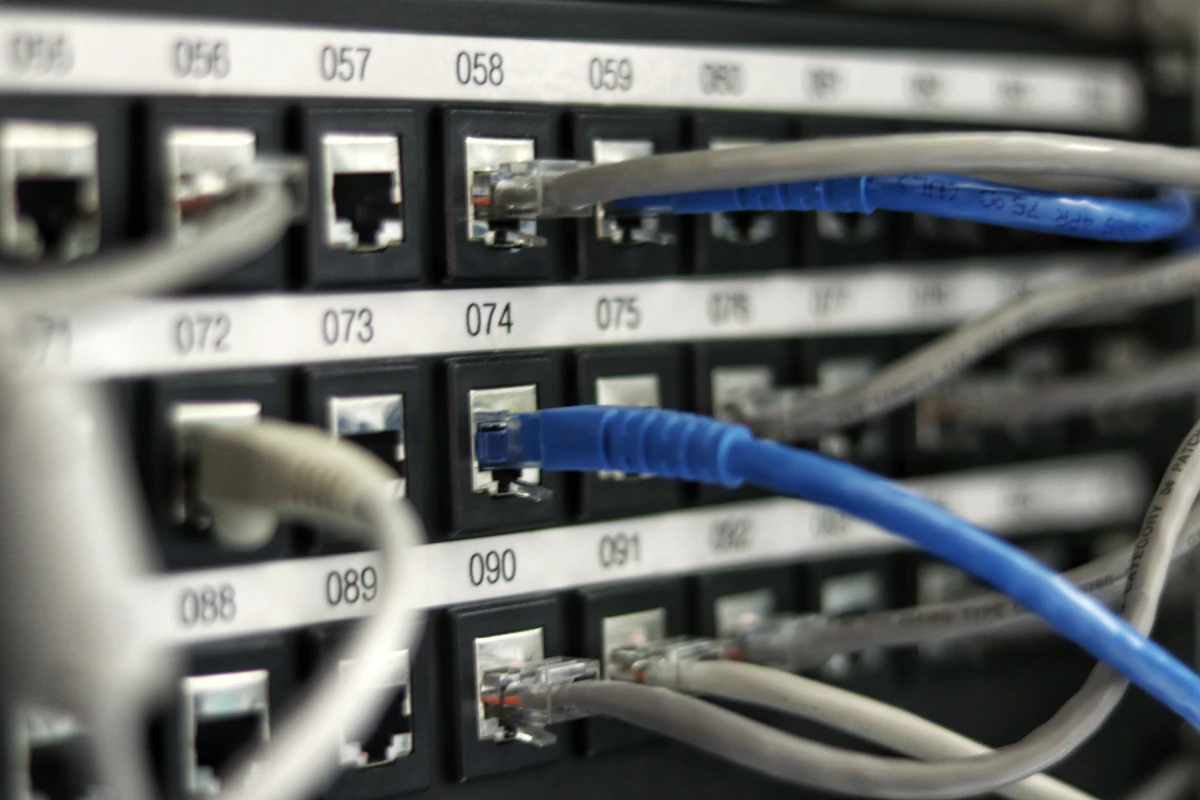
Cloud infrastructure that is boring on purpose.
We design and operate cloud environments on AWS, Google Cloud and Azure. Our preference is for architectures that are simple, observable and cheap to reason about — managed services where they earn their keep, self-hosted where they do not.
Infrastructure is defined in code, reviewed like application changes, and deployed through the same pipeline. Cost, security and reliability are treated as design constraints from day one, not remediated later. Our clients receive an environment whose behaviour is predictable and whose bill is intelligible.

Applied AI, with the same rigour as the rest of the system.
We apply machine learning and, where appropriate, large language models to problems where the business value is measurable and the failure modes are understood. We do not build AI features as marketing — we build them where they meaningfully reduce human effort or improve a decision that is currently made without enough information.
Our AI work includes evaluation frameworks, monitoring for drift and regression, and clear boundaries where a model's output is used to inform rather than replace human judgment. Model choice, prompting strategy and retrieval architecture are all treated as engineering decisions, not fashion.

Security built into the architecture.
Security is a design property, not a review stage. We build systems with least-privilege identity, encrypted data flows, auditable actions and monitored perimeters from the first commit. Threat models are written for the systems we build and revisited as the system changes.
We work with client compliance functions on the frameworks that apply — SOC 2, ISO 27001, GDPR, HIPAA, PCI DSS — and we design controls whose evidence can be produced from the system itself, so audits are a report rather than a scramble.

Data platforms that analysts trust.
We build data platforms end-to-end — ingest, transformation, warehouse, semantic layer, and the tools business users actually open. The measure of a good data platform is not throughput; it is whether analysts and operators trust the numbers enough to make decisions from them.
Our data work leans on well-understood tools: Postgres, Snowflake, BigQuery, ClickHouse, Kafka, dbt, Airflow. We favour incremental models with tested transformations over sprawling notebooks. Data contracts, lineage and freshness are made visible to consumers.

Foundations that other teams can build on.
Beyond the cloud, we help clients think about their infrastructure as a whole: identity, networking, secrets, environments, observability, and the connective tissue that lets engineering teams move safely.
The goal is not to build a bespoke platform. It is to assemble a small, well-chosen set of tools and to write the internal documentation so that any engineer in the organisation can use them without having to ask.
Advice that costs less than acting on it.
Our consulting engagements are short by design: two to eight weeks of concentrated work producing a written architecture, a sequenced delivery plan, or a technical due diligence memo. We deliver something a leadership team can read in an afternoon and act on the same week.
Consulting is not a doorway to a longer engagement. Roughly half the time the client acts on the memo without us; that is fine. The output stands on its own.
Managed Services
For systems we have built, and occasionally for systems we have inherited, we offer a managed service where Verda holds the pager. This is a small part of the practice — deliberately so — and only offered where the operational model is understood and defensible.
Managed engagements come with a written service description, an escalation path with names, and a monthly report on incidents, changes and health. We do not offer generic "24/7 support" as a line item.
Curiosity, kept on a short leash.
We take innovation seriously enough to be sceptical of it. New tools are evaluated against the ones we already know: does this pay for its learning cost, does it earn its complexity, will it still be supported when the client is depending on it. Only a fraction of what we try ends up in production systems, and that is by design.
Where innovation earns its place, it becomes part of the standard practice — written down, reviewed, and applied consistently.
From concept to a product that ships.
For clients building a product rather than an internal system, we work end-to-end: shaping the problem, prototyping quickly, building the first production version, and staying long enough to see it operate.
Product engagements are structured differently — closer collaboration with the founding team, more emphasis on iteration, and clearer decision points about what to keep and what to remove before scale.
How the week actually looks.
We describe our workflow honestly because it is the thing clients feel every day. Rituals are kept lightweight, meetings are scarce and short, and the calendar is designed so that engineers can spend most of their day doing engineering.
A 45-minute session with client leads to set the week's objectives and surface risks.
Written status in a shared channel. No standups. Blockers are addressed in a same-day call.
One extended session on architecture, code or incidents from the previous week.
Engineers pair regularly, with client engineers when possible, to keep knowledge distributed.
Cutoff for the week's deploys, followed by written notes on what changed and why.
A short document on delivery, risk and cost. Read in ten minutes, actionable in one meeting.

24 · Team Culture
The culture is quiet, and it shows in the work.
We hire senior engineers who have worked in operational contexts, who write well, and who are comfortable being the person the client calls at an awkward hour. We keep the firm small so that everyone knows what everyone else is working on, and so that no one is billing hours to a project they have never seen.
Internal culture emphasises writing, review and rest. Engineers are protected from context-switching, given time to think, and expected to publish what they learn back into the practice. The firm exists to be a good place to do the work — the client outcomes follow from that.
Questions we hear often.
Written plainly. If your question is not here, the contact page has an email address that reaches a human.
- What kind of engagements does Verda Agro take on?
- We accept engagements where technology is central to the business — replatforming legacy systems, building new product surfaces, standing up cloud environments, hardening security posture, and turning operational data into decisions. Retainers, discovery sprints and multi-quarter builds are all part of the practice.
- How is the team structured on a typical build?
- A senior technical lead sits with the client throughout the engagement. Around them we compose a pod of engineers, a delivery partner, and specialists — infrastructure, security, data — brought in for the phases where their expertise is load-bearing. There is no bench of juniors farmed out on your account.
- Do you work with existing internal teams?
- Most of our work is embedded alongside client engineers. We contribute code, review pull requests, run architecture sessions, and hand over documentation and runbooks so the internal team can own everything we build once the engagement ends.
- Which industries have you delivered for?
- Financial services, agriculture technology, logistics, healthcare operations, industrial manufacturing, energy and public sector programmes. The common thread is systems that must remain correct under load and auditable over time.
- How do you approach security and compliance?
- Security is treated as an architectural concern from day one, not a checklist added at the end. We work with client compliance functions on the frameworks that apply — SOC 2, ISO 27001, GDPR, HIPAA, PCI DSS — and design systems whose controls can be evidenced without heroics.
- What does a discovery phase look like?
- Two to four weeks of concentrated work: interviews with stakeholders and operators, review of current code and infrastructure, a written architecture assessment, and a delivery plan with sequencing, risks and a realistic timeline. Discovery outputs stand on their own even if the build never proceeds.
Write to us.
The best way to start a conversation is a short email describing the system you are thinking about, the constraints you are under, and the timeline you are working with. A senior engineer will read it and reply within two business days.